Checklist
Clocks Fell Back. Is Your Jobsite Lit to OSHA Minimums?
Darkness comes an hour earlier now. What OSHA 1926.56 requires in foot-candles, plus a dusk walk checklist to light stairs, accessways, and storage.
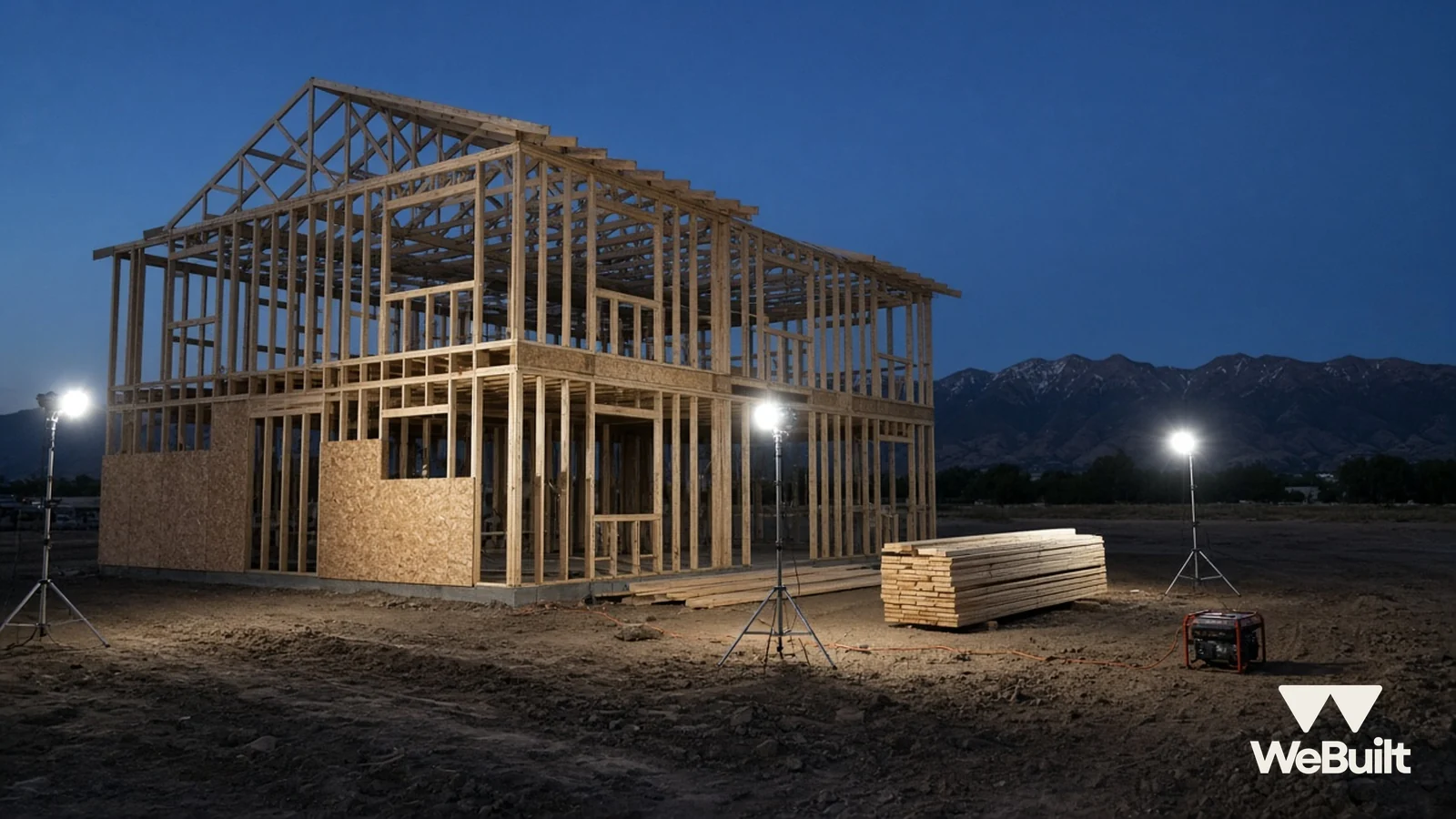
Daylight saving time ended at 2 a.m. on Sunday, Nov. 1 [1]. Your crew got an hour of sleep back. Your jobsite lost an hour of afternoon light.
That last hour of the workday, when people are tired, cleaning up, and carrying tools back to the truck, is now in the dark or close to it. This checklist covers what OSHA requires for jobsite lighting and how to find the dark spots on your site this week.
Afternoon light is gone, starting now
Every state observes daylight saving time except Hawaii and most of Arizona [1], so if you work in Utah, your afternoons just got shorter. For a sense of the change, CBS News, citing the National Weather Service, gave Boston's numbers: sunset was 5:39 p.m. on Saturday and 4:37 p.m. on Sunday, back on standard time [1]. Your town's times are different, but the jump is about an hour everywhere that changes clocks.
Daylight saving time won't start again until Sunday, March 14, 2027 [1]. That's more than four months of short afternoons. If your crew works until 5:00 or later, plan for lighting now rather than finding out the hard way.
What OSHA 1926.56 requires
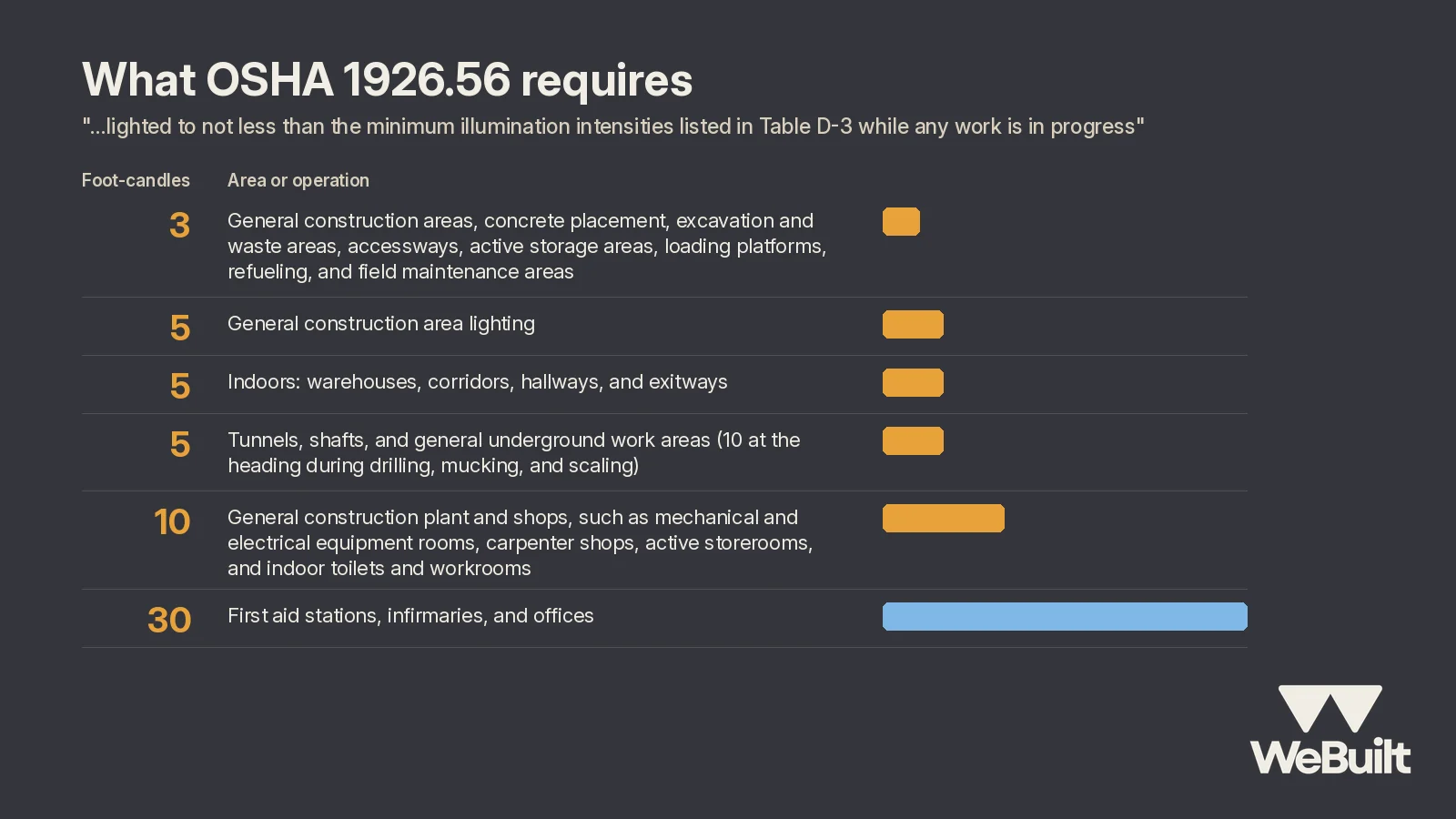
OSHA's construction lighting rule is short. It says construction areas, ramps, runways, corridors, offices, shops, and storage areas "shall be lighted to not less than the minimum illumination intensities listed in Table D-3 while any work is in progress" [2].
Here's the table, in foot-candles (a measure of how much light hits a surface) [2]:
| Foot-candles | Area or operation |
|---|---|
| 3 | General construction areas, concrete placement, excavation and waste areas, accessways, active storage areas, loading platforms, refueling, and field maintenance areas |
| 5 | General construction area lighting |
| 5 | Indoors: warehouses, corridors, hallways, and exitways |
| 5 | Tunnels, shafts, and general underground work areas (10 at the heading during drilling, mucking, and scaling) |
| 10 | General construction plant and shops, such as mechanical and electrical equipment rooms, carpenter shops, active storerooms, and indoor toilets and workrooms |
| 30 | First aid stations, infirmaries, and offices |
For areas the table doesn't cover, the rule points to an American National Standard for industrial lighting [2].
Two things stand out for small crews. First, the rule applies "while any work is in progress" [2]. If anyone is still working, the lighting rule applies. Second, accessways and storage areas are on the list [2]. The path from the house to the truck and the spot where you stack materials count.
Read the current eCFR text yourself. This article is a summary, not legal advice.
The 20-minute dusk walk
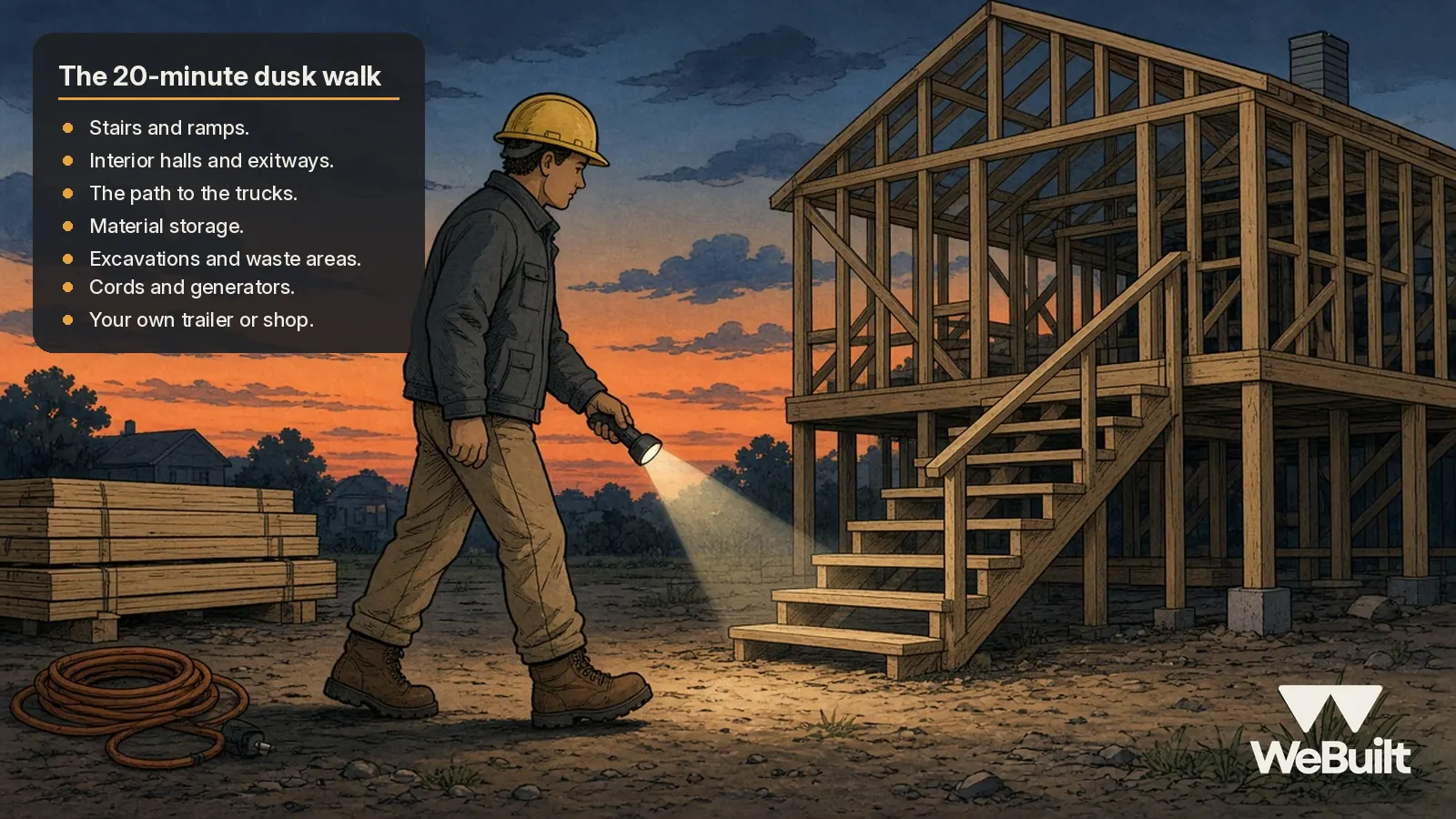
Pick a day this week and walk your site at the time your crew usually wraps up. Bring a flashlight and a notepad (or your phone). Check:
- Stairs and ramps. Can you see every tread edge? Is there a light at the top and bottom?
- Interior halls and exitways. In a remodel with the power off, are these lit with temporary lights?
- The path to the trucks. Hoses, cords, scrap, ruts, and curbs are all trip hazards in the dark.
- Material storage. Can someone find and lift what they need without guessing?
- Excavations and waste areas. OSHA lists them in the table [2]. Open trenches and floor openings are the last place you want to guess.
- Cords and generators. Is the temporary lighting itself creating new trip hazards or overloaded circuits?
- Your own trailer or shop. OSHA's table puts shops and offices higher than general areas [2].
Write down every dark spot. Then fix the worst one first.
Practical fixes that don't take long
- Temporary work lights on stands at stairs, ramps, and the main path. Put them where they light the walking surface, not people's eyes.
- String lights for interior halls on remodels where the circuits are off.
- Headlamps for cleanup and tool pickup. They don't replace area lighting, but they help.
- A light meter check. If you want to know whether you're meeting the table, an inexpensive light meter or meter app gives you a foot-candle reading. Treat phone app readings as rough.
- Move the dirty work earlier. Schedule cleanup, load-out, and material moves before the light fades.
- Shift the day. Some crews start earlier through the winter. Mornings are lighter now [1].
Example: a remodel crew's new winter schedule
Example numbers for illustration:
A four-person remodel crew used to work 7:30 a.m. to 5:00 p.m. After the time change, the last 30 minutes are getting dark on site.
| Item | Before | After the dusk walk |
|---|---|---|
| Start time | 7:30 a.m. | 7:00 a.m. |
| Last task | Cleanup and load-out | Load-out at 4:00 p.m., then interior work |
| Temporary lights | None | 3 stand lights plus 1 string run |
| Cost of lights (one-time) | $0 | $260 |
The crew keeps the same hours and moves the outside work earlier. The $260 is example pricing. Check your supplier.
Make it a toolbox talk
Use this as next Monday's five-minute talk:
- "It gets dark earlier now. Where on this site is hard to see at quitting time?"
- "What do we carry to the truck at the end of the day, and what's in the way?"
- "Who checks the lights are on before cleanup starts?"
Let the crew answer. They know where they've almost tripped.
How WeBuilt helps
Lights, cords, and a schedule change are real costs, and they belong to the jobs that need them. When you record those costs against the job in WeBuilt, they show up in that job's numbers along with materials, labor, and subs. WeBuilt shows revenue, cost, and margin for each job, so you can see what winter conditions actually did to profit per job instead of guessing. That helps when you price next year's winter work. WeBuilt doesn't manage your safety program. It keeps the job's money side honest. See what's included today.
FAQ
How many foot-candles does OSHA require on a construction site?
It depends on the area. General construction area lighting is 5 foot-candles, accessways and active storage areas are 3, and offices are 30 [2].
Does the lighting rule apply after the crew stops working?
The rule applies "while any work is in progress" [2]. If anyone is still working, including cleanup, light the areas they use.
When does daylight saving time start again?
Sunday, March 14, 2027, at 2 a.m. local time [1].
Talk through your winter jobs
Book a 15-minute walkthrough with Ian and bring a job you're running this winter. Founding 25 spots are open for Utah contractors.
Sources
- CBS News, Daylight saving time 2026 ended Sunday. Here's what time the clocks changed and more key details. (updated Nov 2, 2026). Accessed November 2, 2026.
- eCFR, 29 CFR 1926.56 Illumination (current text). Accessed November 2, 2026.