Guide
Why Every Utah Homeowner Job Needs a Written Contract
A written contract protects your price, your schedule, and your Utah homeowner if a sub files a lien. What to include, plus the free DOPL template.

A lot of small residential jobs in Utah still start with a text message and a number. It works fine, right up until the homeowner remembers the scope differently, a sub doesn't get paid, or the job runs three weeks long.
A written contract isn't about distrust. It's how you protect your price and schedule, and in Utah it can also protect your customer if there's ever a lien. This is general information, not legal advice. Talk to an attorney about your own contract.
Why the state built a template
Utah's Division of Professional Licensing (DOPL) says it and the Division of Consumer Protection often get complaints about construction work, then learn that no agreement exists or the agreement isn't specific enough to make expectations clear [1]. So DOPL created an optional Residential Construction Agreement that contractors and homeowners can use and customize [1].
DOPL recommends both parties read, understand, complete, and sign each page [1]. It also says the agreement isn't legal advice, but that it would be legally binding in litigation [1].
What the DOPL template covers
The agreement's table of contents is a good checklist for any contract you write [2]:
| Section | What it settles |
|---|---|
| Parties, property, effective date | Who, where, when, and your license number |
| Scope of work | Plans and specs, attached as Exhibit A |
| Price and payment | Fixed price, initial payment, invoice schedule |
| Schedule | Start, substantial completion, delays |
| Selections and changes | Allowances and the change order process |
| Construction standards | Code compliance and workmanship |
| Subs, employees, suppliers | Who you can hire |
| Liens and civil actions | Owner's protection |
| License and insurance | Proof attached as Exhibit C |
| Safety, indemnity, warranty | Responsibilities and defects |
| Termination and disputes | How it ends and how disagreements are handled |
A few details worth copying:
- It's fixed price. Changes must go through a written, signed Change Order (Exhibit B) [2].
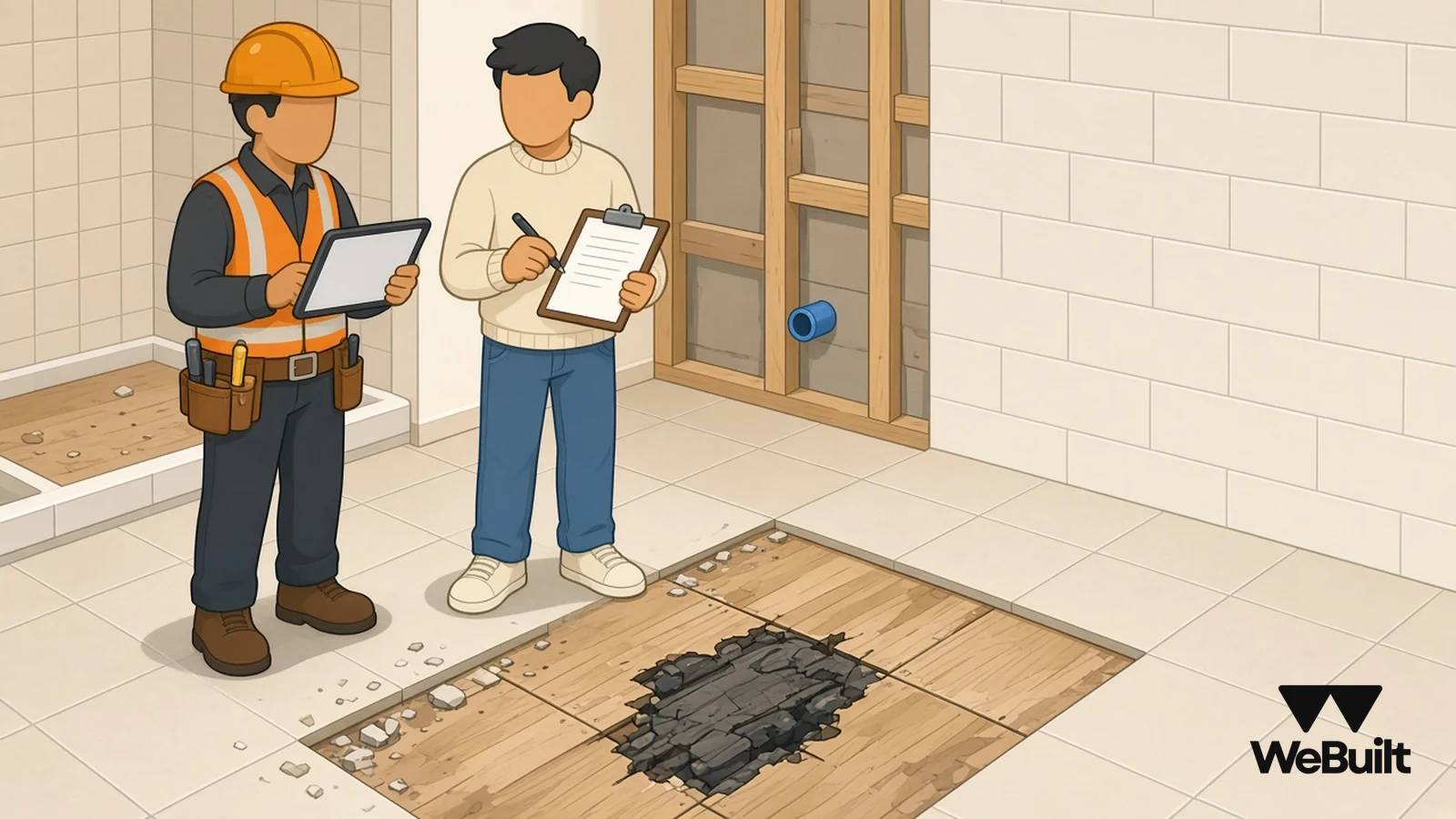
- Unexpected conditions get reported in writing. The contractor must tell the owner in writing about material plan errors or unexpected conditions, and not proceed on affected work until the owner directs it [2].
- Delays get noticed fast. If the contractor learns of a delay, notice goes to the owner within a reasonable time, and no more than 7 days [2].
- Allowances are clear. If the owner picks something that costs more than the allowance, the owner pays the difference without a change order [2].
The Utah lien angle: why homeowners should want it too
Here's a selling point most contractors don't use. Utah's Residence Lien Recovery Fund, which used to pay subs and suppliers who placed liens on homes, was announced as depleted in June 2026 [3]. Homeowners are still protected from paying twice through a Certificate of Compliance. To get one, the homeowner shows they did their due diligence, which includes [3]:
- They had a written contract
- They hired a licensed contractor
- They paid the contractor in full
Once DOPL issues the certificate, the lienholder must remove the lien within 15 days [3]. So a written contract with a licensed contractor is part of how your customer stays protected. That's a good reason to bring it up during the sale.
It also helps to know that subs and suppliers file preliminary notices on residential jobs through the State Construction Registry, and homeowners can track their project there [3][4].

Example: what goes in a small-job contract
Example job for illustration: an $18,500 bathroom remodel.
| Contract item | Example entry |
|---|---|
| Scope | Demo to studs, new tub/shower valve, tile surround, vanity, toilet, LVP floor. Plans and selections in Exhibit A. |
| Exclusions | Electrical beyond moving one switch, mold remediation, hidden structural repair (priced by change order) |
| Allowances | Vanity $900, tile $8/sq ft |
| Price | $18,500 fixed |
| Payments | Deposit at signing, progress payment at tile start, balance at completion |
| Schedule | Start Nov 16, substantial completion Dec 11 |
| Changes | Written change order with price and schedule impact, signed before work |
| Proof | License number and insurance certificate attached |
What about time-and-materials jobs?
Markup and Profit's advice is to use T&M only for small, quick jobs (they suggest under $3,000), and to get a signed change order with payment upfront for any changes even on T&M or cost-plus work [5].
Before you sign: a quick check
- Is your license number on it, and are your license and insurance current?
- Are the scope and exclusions specific enough that a stranger would understand them?
- Is every allowance a dollar amount?
- Does the payment schedule match how the work actually happens?
- Is the change order process spelled out?
- Did both of you sign, and does the homeowner have a copy?
Keep the contract and the job numbers together
Your contract sets the price. Your job costs tell you whether the price was right. WeBuilt tracks costs on every job and shows profit per job, so you can see how each contract actually turned out. See the platform.
FAQ
Does Utah require me to use the DOPL contract?
No. It's optional, and you can change or delete provisions in writing [1].
How does a written contract help my customer if a sub files a lien?
A written contract with a licensed contractor, plus payment in full, is part of what a homeowner shows to get a Certificate of Compliance. After it's issued, the lien must be removed within 15 days [3].
What should happen when I find hidden damage?
Under the DOPL template, tell the owner in writing and don't proceed on that work until they direct you, then handle it with a change order [2].
Tighten up your paperwork and your numbers
Book a 15-minute walkthrough with Ian. Founding 25 spots are open for Utah contractors.
Sources
- Utah DOPL, Construction Contract: For Use in Utah Home Construction Projects. Accessed November 2, 2026.
- Utah DOPL, Residential Construction Agreement (May 29, 2025). Accessed November 2, 2026.
- Utah Dept. of Commerce, Utah's Residence Lien Recovery Fund is Officially Depleted (June 2026). Accessed November 2, 2026.
- Utah State Construction Registry, Guide for Contractors. Accessed November 2, 2026.
- Markup and Profit, Time and Material Woes. Accessed November 2, 2026.